
How Logos Design Shapes the Success of Your Branded Promotional Products
Discover how smart logos design choices can elevate your branded merchandise and make your promotional products work harder for your business.

Written by
Layla Abboud
Branding & Customisation
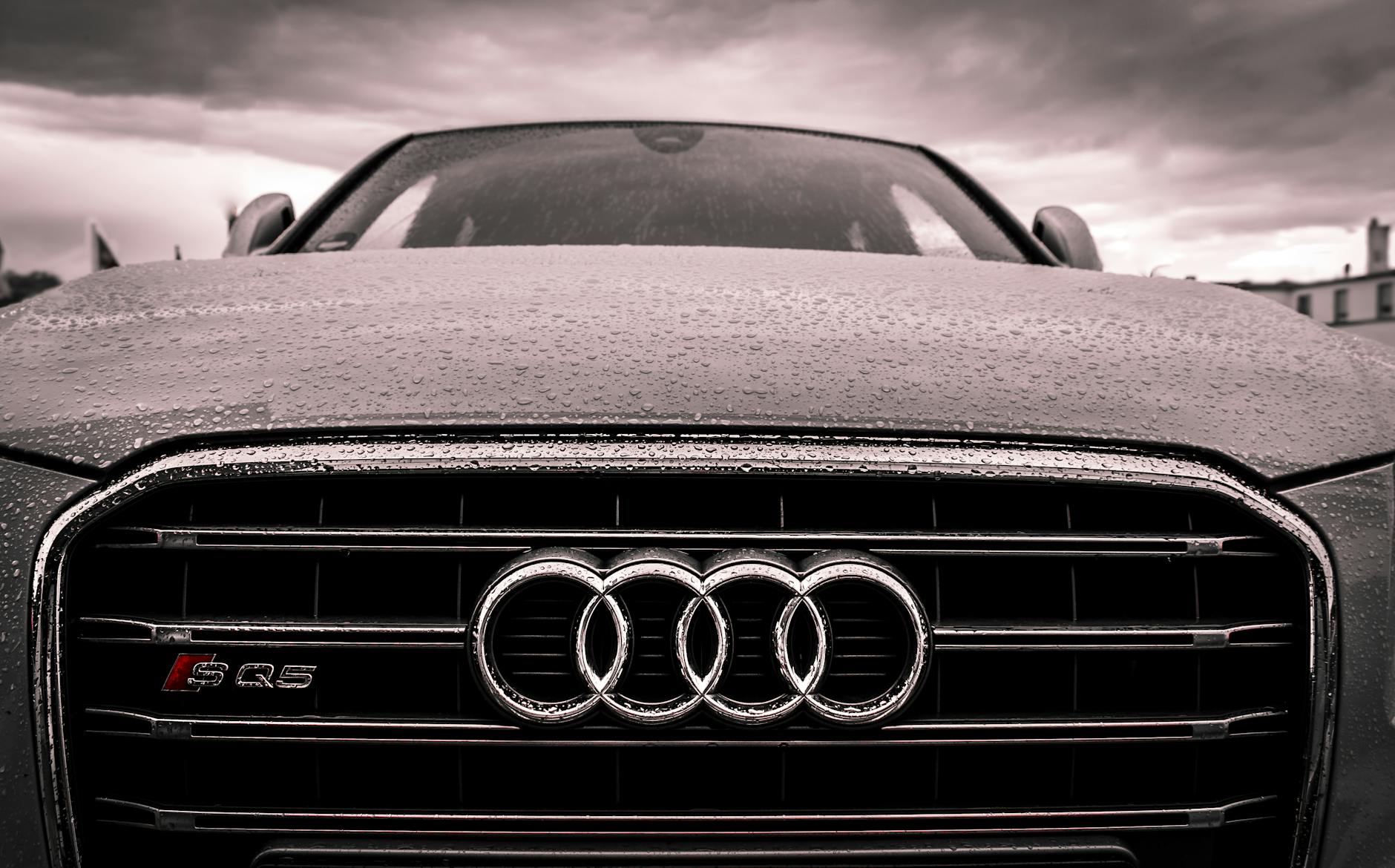
Getting your logos design right is one of the most important decisions you’ll make before ordering any promotional product. Whether you’re a Sydney-based corporate preparing welcome packs for new staff, a Melbourne school ordering sports carnival merchandise, or a Brisbane charity sourcing conference giveaways, the quality and suitability of your logo will directly determine how professional — and how powerful — your branded items look in the real world. A well-designed logo doesn’t just look great on a screen. It needs to translate beautifully onto fabric, metal, plastic, glass, and paper, often at sizes ranging from a tiny pen barrel to a full-back hoodie print. Understanding how logos design works in the context of promotional products can save you time, money, and a great deal of frustration.
Why Logos Design Matters More Than You Think in Promotional Products
Most organisations already have a logo they’re happy with. But “happy with it on a business card” and “ready for promotional merchandise” are two very different things. A logo that looks brilliant in a marketing brochure can become a muddy mess when screen printed onto a polo shirt or laser engraved onto a metal drink bottle.
The core issue is reproduction. Promotional products use a wide range of decoration methods — screen printing, embroidery, sublimation, pad printing, laser engraving, digital printing, debossing, and more. Each of these methods has specific requirements around colour, detail, and file format. A logo with subtle gradients, thin hairlines, or dozens of colours may need to be adapted or simplified before it can be applied to merchandise effectively.
This is why many suppliers will ask for your artwork in vector format — typically an .ai, .eps, or .pdf file created in software like Adobe Illustrator. Vector files are resolution-independent, meaning they can be scaled to any size without losing quality. If you only have a JPEG or PNG logo, that’s a good sign your artwork may need attention before you place a bulk order.
Common Logo Issues That Cause Production Headaches
Here are some of the most frequent logos design problems that arise when ordering promotional products:
- Too many colours: Most screen printing setups charge per colour. A six-colour logo significantly increases your unit cost compared to a one or two-colour version. Simplifying your palette saves money across a large order.
- Thin strokes and fine details: Lines thinner than 0.5pt often disappear or bleed when printed. Embroidery in particular struggles with intricate fine detail — needles can’t replicate hairline fonts or micro-detail.
- Gradients and drop shadows: These effects don’t translate well to most decoration methods. A logo that relies on a gradient for its visual impact will need a solid-colour alternative for most merch applications.
- Reversed-out or white elements: White logos on dark products can work beautifully, but they require specific planning. If your logo assumes a white background, it may not work as-is on a navy tote bag or black drinkware.
Understanding these issues upfront helps you brief your designer (or review your existing artwork) before you start requesting quotes on merchandise.
Matching Your Logos Design to the Right Decoration Method
One of the most impactful decisions in any promotional product project is choosing the right decoration method for your logo — and then making sure your logo is suited to that method. The two are deeply connected.
For branded work polos ordered for a corporate team, embroidery is usually the premium choice. It looks professional, lasts the life of the garment, and gives a textured, three-dimensional quality that can’t be replicated with print. However, embroidery works best with logos that are bold, relatively simple, and at least 15–20mm in height. Highly detailed logos, particularly those with small text or fine design elements, often need to be adapted into an “embroidery-ready” version by the decoration team.
Screen printing, by contrast, is ideal for large-run orders like branded t-shirts for school sports days or event staff uniforms. It delivers vibrant flat colour at a low per-unit cost, making it the go-to for high-volume apparel. Our guide to direct-to-garment printing for promotional products explores how newer digital printing methods are expanding what’s possible with full-colour, photographic-quality artwork on fabric — a great option if your logo is complex or your organisation uses a lot of gradient-based design.
Laser engraving is another story entirely. Common on metal and wooden products — think pens, keyrings, award plaques, and insulated bottles — laser engraving burns away the surface material to reveal a contrasting layer beneath. This means your logo appears as a single tone (usually silver, gold, or natural wood). Logos that work well in laser engraving tend to be clean, bold, and free of fine detail. For example, a well-designed monogram or wordmark often laser engraves beautifully, whereas an intricate multi-element crest may lose definition.
Sublimation and Full-Colour Print
Sublimation printing is where complex, multi-colour logos truly shine. Used extensively on insulated water bottles, drinkware, and polyester apparel, sublimation allows full-colour, edge-to-edge decoration that captures gradients, photographic images, and intricate detail. It’s a popular choice for event merchandise, sporting clubs, and schools wanting a premium look on a practical product. Worth noting: sublimation only works on white or light-coloured polyester-compatible surfaces, so the base product colour matters.
Pad printing — the method used for products like branded pens, white highlighter pens, and small plastic items — typically accommodates one to four colours and requires logos to be separated into solid colour layers. This is an important consideration when choosing giveaway stationery for a trade show or conference.
Preparing Your Artwork for a Smooth Production Process
Once you understand how your logo interacts with different decoration methods, preparing your artwork becomes much more straightforward. Here’s a practical checklist to follow before submitting your artwork files to a supplier:
- Supply vector files wherever possible. Send your
.ai,.eps, or.pdfartwork to ensure sharp, scalable reproduction. - Outline all fonts. Convert any text in your logo to outlines so the supplier doesn’t need the original typeface installed.
- Separate your colours. Know your PMS (Pantone Matching System) colour codes. Colour consistency across different products and suppliers depends on it.
- Create simplified logo variants. Have a one-colour version, a reversed-out (white) version, and a simplified “mark only” version of your logo available for different applications.
- Check minimum size requirements. Embroidery, for example, typically can’t reproduce text smaller than around 6mm in height reliably.
Many organisations find it worthwhile to work with a graphic designer to develop a “merch-ready” logo kit alongside their main brand assets. This pays dividends when you’re ordering everything from branded tote bags for a conference to promotional notebooks for corporate gifts.
Logos Design Across Different Product Categories
Different product types present different canvas shapes, sizes, and surface materials — all of which affect how your logo should be positioned and sized. Let’s look at a few common categories:
Drinkware: Cylindrical products like insulated drinkware offer a curved print surface, which limits how large a logo can be before it wraps and distorts. Wide, horizontal wordmarks tend to work better than tall, stacked logo layouts on bottles and mugs.
Bags: Products like stylish lunch bags and cooler bags for outdoor events often offer larger print areas, making them ideal for showcasing a logo with more detail or additional brand messaging. Tote bags in particular are popular because they offer generous flat print space.
Tech accessories: Items like promotional cable organisers and VR headsets for tech conference giveaways often have smaller, more unusual surfaces. Logo placement here needs careful thought — a logo crammed into an awkward space can look worse than a clean, minimal mark placed thoughtfully.
Apparel: Beyond print area, fabric colour choices dramatically affect how a logo reads. A navy logo on a white t-shirt is straightforward. The same logo on a charcoal hoodie may require a different colour treatment entirely. For inclusive events or awareness campaigns — such as merchandise for Wear It Purple Day — colour choices become especially meaningful and should be planned in coordination with your brand guidelines.
Health and wellness products: Items like sustainable branded face masks and toiletry bags offer relatively compact print areas that reward clean, simple logos over highly detailed artwork.
Budgeting for Logos Design and Artwork Preparation
A common oversight when budgeting for promotional merchandise is forgetting to account for artwork or setup costs. If your logo needs to be redrawn in vector format by a graphic designer, that’s an additional cost to factor in — typically $100–$400 depending on complexity. Most merchandise suppliers also charge a one-time setup fee per decoration position (commonly $40–$80 for screen printing setups, or a digitising fee of $60–$120 for embroidery), which covers the process of converting your artwork into a production-ready file.
These costs are usually absorbed across large orders, which is one of the reasons bulk ordering is so financially efficient. Understanding the ROI of promotional products helps frame these upfront costs as worthwhile investments rather than inconvenient extras.
For organisations wanting to minimise costs, having clean, well-prepared artwork from the outset significantly reduces the likelihood of back-and-forth artwork corrections that can delay production and add charges.
Conclusion: Key Takeaways for Getting Your Logos Design Production-Ready
Getting logos design right for promotional merchandise isn’t just a creative exercise — it’s a practical and strategic one. Here’s a summary of the most important points to keep in mind:
- Always supply vector artwork (
.ai,.eps, or.pdf) with fonts outlined and PMS colours specified to ensure accurate, high-quality reproduction across all products. - Adapt your logo for different decoration methods — create simplified, one-colour, and reversed-out versions to ensure flexibility across embroidery, screen printing, laser engraving, and pad printing.
- Match your logo’s complexity to the product and print area — simpler logos tend to work better on small items, while larger surfaces can accommodate more detail.
- Account for setup and artwork preparation costs in your merchandise budget, particularly for new suppliers or first-time orders with a specific logo variant.
- Think about colour context — your logo should look intentional and professional on every product, regardless of the base colour of the item. Proofing before production is always worth it.
When your logos design works seamlessly with your chosen products and decoration methods, the result is branded merchandise that genuinely strengthens your organisation’s identity — and that’s worth every bit of careful planning.