
The Complete Quality Guide to Direct to Garment Printing for Promotional Products
Discover how direct to garment printing works, when to use it, and how to get the best quality results for your branded promotional products.

Written by
Layla Abboud
Branding & Customisation
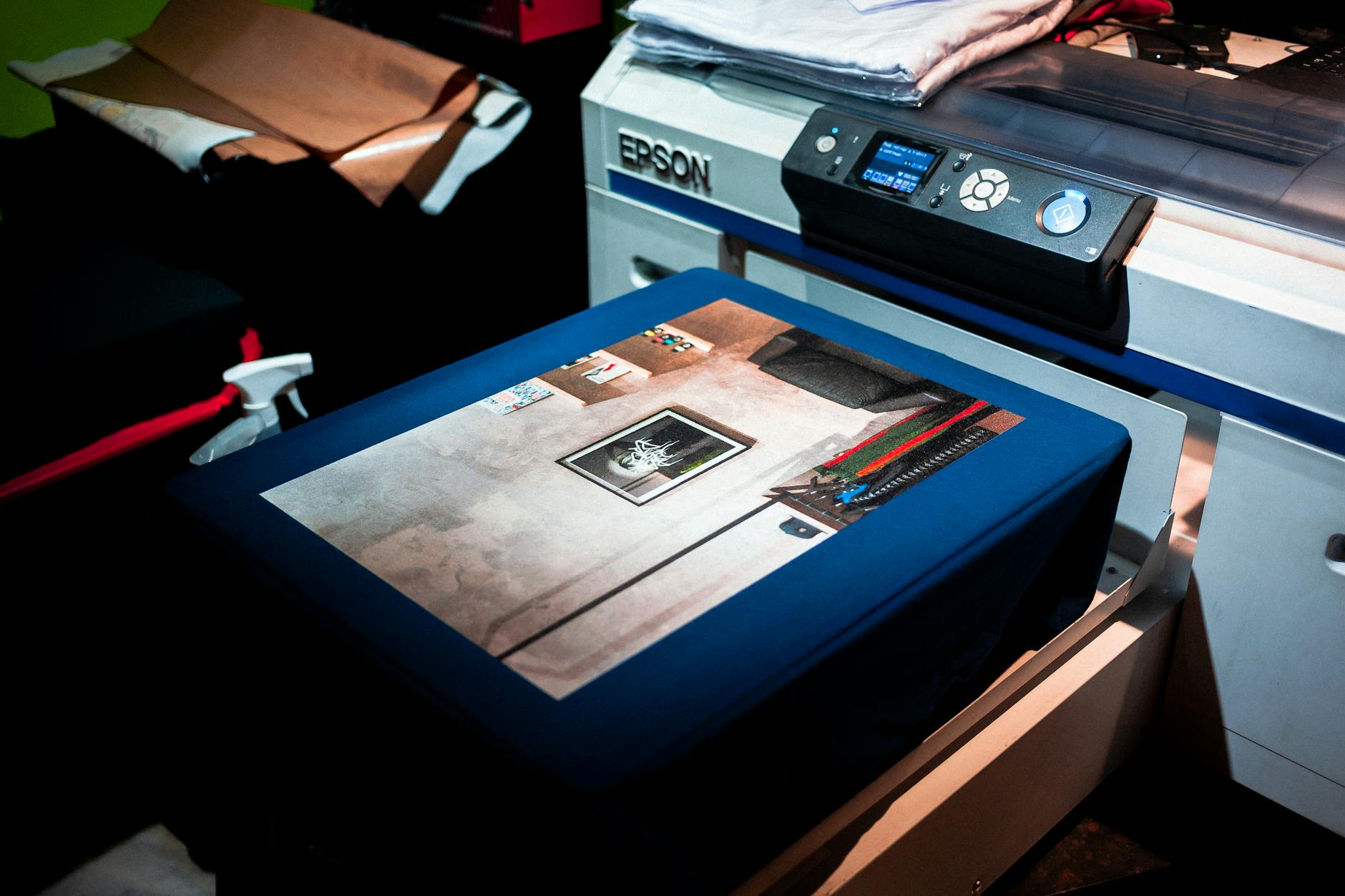
Direct to garment printing has quietly revolutionised the way Australian businesses, schools, and organisations approach custom apparel. Where traditional decoration methods once demanded large minimum orders, limited colour palettes, and weeks of lead time, DTG printing has opened the door to something far more flexible — and far more creative. But like any decoration technique, understanding how it works and how to get the best results is the difference between branded merchandise that looks professional and products that fall short of expectations. This quality guide to direct to garment printing for promotional products will walk you through everything you need to know, from how the technology works to how to plan a successful order.
What Is Direct to Garment Printing and How Does It Work?
Direct to garment printing — commonly abbreviated as DTG — is a digital printing process that applies water-based ink directly onto fabric using a modified inkjet printer. Think of it like a regular document printer, but instead of feeding paper through the machine, you feed a t-shirt or hoodie. The printer reads your artwork file and deposits ink directly into the fibres of the garment, creating a soft, detailed print that’s firmly embedded into the fabric rather than sitting on top of it.
The process involves a few key stages. First, the garment is pre-treated with a solution that helps the ink bond properly — this step is particularly important for darker fabrics where colours need to show up vividly. The garment is then loaded onto a flat platen and fed into the DTG printer, which applies the design layer by layer. Finally, the garment is heat-cured to set the ink and ensure durability.
How DTG Compares to Other Decoration Methods
Understanding DTG printing means understanding where it fits alongside other methods. Screen printing, for example, is excellent for simple, bold designs in limited colours at high volumes — it’s why you’ll find it all over our guide to choosing decoration methods for custom apparel. Embroidery creates a premium, textured look that works beautifully on polo shirts and caps. Sublimation, on the other hand, is ideal for polyester fabrics and all-over prints.
DTG sits in its own lane. It excels when:
- Your design includes gradients, photographic imagery, or many colours
- You need a small quantity — even a single unit in some cases
- You want a soft, breathable print rather than a raised or textured finish
- Your garments are cotton or cotton-rich blends
For broader context on different branding techniques and where each one shines, understanding the full landscape of decoration options for promotional products is worth exploring before you commit to any one method.
Quality Factors That Determine Your DTG Print Results
When it comes to this quality guide for direct to garment printing, it would be incomplete without an honest look at the variables that influence print quality. The good news is that most of them are within your control as the buyer — as long as you know what to look for.
Artwork Resolution and File Format
DTG printing is only as good as the artwork you supply. Because it reproduces fine detail and complex colour accurately, low-resolution images will print with visible pixelation or blurriness. As a general rule, your artwork should be supplied at a minimum of 300 DPI at the intended print size. PNG files with transparent backgrounds are preferred for most DTG workflows, and CMYK colour profiles tend to give more predictable results than RGB — though a good print supplier will advise you on this before production begins.
Garment Fabric Composition
Fabric composition has a major impact on how a DTG print looks and feels. Cotton is the gold standard for DTG printing — it accepts water-based inks beautifully, resulting in vibrant colour and a soft hand feel. A 100% combed cotton t-shirt from a quality garment blank will produce noticeably better results than a budget polyester or poly-cotton blend.
Darker garments require that pre-treatment process mentioned earlier, and the quality of that pre-treatment step directly affects how the colours appear on black, navy, or forest green fabrics. A professionally managed DTG print run will always include proper pre-treatment; if a supplier skips this step to save time, print quality will suffer noticeably on dark colours.
Colour Accuracy and Consistency
One of the trade-offs with DTG compared to screen printing is that exact PMS colour matching is more challenging. DTG operates in a CMYK colour space, meaning it mixes cyan, magenta, yellow, and black inks to simulate colours rather than using pre-mixed spot colours. For organisations with strict brand colour requirements — a university, a government department, a major corporation — it’s worth discussing colour expectations with your supplier and requesting a sample or physical proof before committing to a full run.
Print Size and Placement
Standard DTG print areas typically cover a 30cm x 40cm chest print zone, which suits most promotional t-shirts well. Designs that extend beyond this area may require additional handling, different equipment, or a different decoration method altogether. Placement consistency across a batch of garments is also something to discuss with your supplier — for events or corporate merchandise where visual uniformity matters, asking about their quality control process is entirely reasonable.
When Does DTG Printing Make Sense for Promotional Products?
Not every promotional product situation calls for DTG. Understanding when it genuinely is the right choice will help you allocate your budget wisely and get the best outcome.
Small Quantity Orders and Samples
DTG shines when you need low minimum order quantities (MOQs). Most DTG suppliers can fulfil orders of 10 to 50 garments without significant cost penalties — and some can do even single units for sampling purposes. This makes it ideal for:
- Schools trialling a new uniform design before committing to a large run
- Startups wanting a small batch of branded t-shirts for a pop-up event
- Conference organisers printing speaker or volunteer shirts where quantities vary
- Businesses ordering personalised staff gifts with individual names or numbers
This flexibility is part of why DTG has become popular for event merchandise and corporate gifting programs where exact quantities are often hard to predict in advance.
Complex, Multicolour Artwork
If your brand has a detailed logo, a photographic element, or a design with many colour transitions, DTG is one of the few methods that can reproduce it faithfully on fabric without the complexity and cost of a multi-colour screen printing setup. A community charity in Brisbane running a fundraising campaign with a vibrant, illustrated design on t-shirts would find DTG far more cost-effective than paying screen printing setup fees for eight or more colours.
On-Demand and Personalised Products
One increasingly popular application for DTG is personalised or on-demand merchandise — where each item in a batch carries individual customisation, such as a name, number, or unique graphic. Schools ordering house sports shirts for students in Adelaide, for instance, might use DTG to personalise each shirt without the cost implications of traditional methods.
Practical Tips for Ordering DTG Printed Promotional Products
Getting a great result from a DTG print run comes down to preparation and communication. Here are the practical steps that will serve you well regardless of your organisation type.
Prepare your artwork properly. Supply high-resolution files — ideally 300 DPI or higher — in PNG or PDF format. Avoid supplying logos pulled from websites, as these are invariably low resolution and will produce poor print quality.
Request a digital proof before production. A reputable supplier will provide a digital mockup showing your design on the garment before any printing begins. Review this carefully, especially colour representation and placement.
Order a physical sample if your run is large. For orders over 50 units, the small cost of a sample garment is insurance well worth paying. Physical samples allow you to assess print quality, garment fit, and colour accuracy before committing to your full run.
Consider washability. DTG prints, when properly cured, are durable and wash well. However, following care instructions matters — cold washing and avoiding tumble dryers on high heat prolongs print life considerably. Including wash-care guidance in packaging or signage for staff merchandise is a thoughtful touch.
Plan your turnaround time. Standard DTG turnaround times in Australia typically run between 5 and 15 business days depending on order complexity and supplier capacity. For events, allow buffer time — printing delays, while uncommon with well-organised suppliers, do occasionally happen.
For organisations managing broader merchandise programs — particularly those exploring sustainable product lines alongside custom apparel — resources like our overview of eco-friendly promotional products for Australian organisations and guides on insulated water bottles as branded merchandise can help round out your promotional product strategy.
Budget Considerations for DTG Printing
DTG printing is typically priced per piece, which means it doesn’t benefit from the dramatic per-unit price drops that screen printing offers at very high volumes. At quantities above 200–300 units, screen printing will often be more cost-effective for simple designs. However, for small-to-medium runs or complex artwork, DTG is genuinely competitive.
Expect to pay anywhere from $20 to $50 per garment for a quality DTG-printed t-shirt in Australia, depending on the garment blank quality, print complexity, and order size. Setup fees are generally lower with DTG than screen printing because no physical screens need to be produced — this alone makes it attractive for organisations with limited budgets who still want impressive results.
For organisations wanting to track the return on investment from their branded merchandise programs, our post exploring promotional products ROI data offers useful benchmarks to guide budget decisions. And for those looking to extend beyond garments into complementary branded items — perhaps branded reusable products like straws for hospitality venues — combining DTG apparel with other promotional items is a smart way to create cohesive brand touchpoints.
Conclusion
Direct to garment printing is one of the most versatile and accessible decoration methods available to Australian businesses, schools, and organisations today. When you understand its strengths — detailed colour reproduction, low MOQs, soft hand feel, and design flexibility — and plan your order accordingly, it can deliver genuinely impressive results for promotional merchandise.
Here are the key takeaways from this quality guide to direct to garment printing for promotional products:
- Artwork quality is critical — always supply files at 300 DPI or higher in PNG or PDF format for the best print results
- Cotton fabrics produce the best DTG outcomes — choose 100% cotton or high-cotton-content blanks wherever possible
- DTG is ideal for small runs and complex, multicolour designs — it’s where screen printing’s limitations become opportunities
- Physical proofs and samples are worth investing in for larger or high-profile orders
- Plan your timeline — build in at least two to three weeks from artwork approval to delivery, especially for event-related merchandise
With the right preparation and a reliable supplier, DTG printing can elevate your branded merchandise program and give your organisation a polished, professional presence — whether you’re outfitting staff in Melbourne, distributing event shirts in Perth, or creating fundraising merchandise for a community group on the Gold Coast.